
If you’ve ever pulled into a filling station and seen the NNPC sign, you’ve dealt with NNPC Retail Limited. It’s the most visible part of the NNPC group for ordinary Nigerians.
NNPC Retail Limited is the downstream subsidiary responsible for retail marketing of petroleum products. It operates filling stations across Nigeria, selling petrol, diesel, and other products to motorists and consumers.
Here’s what NNPC Retail does, how it fits into the NNPC group, and why it matters.
The Short Answer
NNPC Retail Limited is a downstream subsidiary of NNPC Limited. It manages the company’s network of filling stations and markets petroleum products to consumers.
NNPC Retail currently operates over 500 filling stations nationwide. It is one of the largest fuel retailers in Nigeria.
The subsidiary also manages convenience stores and other ancillary services at its stations. It ensures availability of petrol, diesel, kerosene, and other products to the public.
If you’re curious about the list of NNPC subsidiaries and their functions, NNPC Retail is the face of the company for most Nigerians. And if you want to understand what NNPC Limited is under the Petroleum Industry Act, NNPC Retail is how the company reaches consumers.
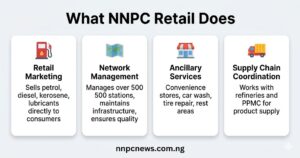
What NNPC Retail Does
Retail Marketing
NNPC Retail sells petroleum products directly to consumers. This includes:
- Petrol (PMS) for motorists
- Diesel (AGO) for commercial vehicles and generators
- Kerosene (DPK) for households
- Lubricants and other products
The subsidiary operates filling stations where consumers can purchase these products.
Network Management
NNPC Retail manages a network of over 500 filling stations across Nigeria. Stations are located in urban and rural areas.
The subsidiary is responsible for:
- Maintaining station infrastructure
- Ensuring product availability
- Managing fuel quality
- Training station staff
Ancillary Services
Many NNPC Retail stations also offer ancillary services:
- Convenience stores selling snacks, drinks, and basic supplies
- Car wash services
- Tire repair and maintenance
- Rest areas for travelers
These services enhance customer experience and generate additional revenue.
Supply Chain Coordination
NNPC Retail works with other NNPC subsidiaries to ensure product supply:
- Products come from refineries (PHRC, WRPC, KRPC) or imports
- PPMC handles wholesale distribution and logistics
- NNPC Retail receives products at depots and distributes to stations
The NNPC refineries locations and status affect product availability at NNPC Retail stations.
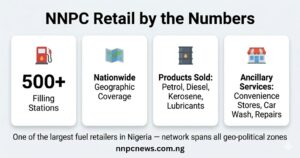
NNPC Retail by the Numbers
| Metric | Figure |
|---|---|
| Number of filling stations | Over 500 |
| Geographic coverage | Nationwide |
| Products sold | Petrol, diesel, kerosene, lubricants |
| Ancillary services | Convenience stores, car wash, repairs |
NNPC Retail is one of the largest fuel retailers in Nigeria. Its network spans all geo-political zones.
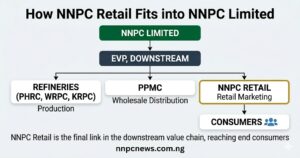
How NNPC Retail Fits into NNPC Limited
Reporting Line
NNPC Retail reports to the EVP, Downstream at NNPC Limited. The EVP, Downstream oversees all downstream activities, including NNPC Retail, PPMC, and the refineries.
NNPC Retail has its own board of directors and management team. The Managing Director of NNPC Retail reports to the EVP, Downstream.
Relationship with PPMC
PPMC (Petroleum Products Marketing Company) handles wholesale distribution. PPMC supplies products to NNPC Retail stations.
NNPC Retail focuses on retail marketing. PPMC focuses on wholesale. They work together to get products from refineries or import terminals to consumers.
Relationship with Refineries
Products from the refineries (PHRC, WRPC, KRPC) flow through PPMC to NNPC Retail stations. When refineries are not producing, products must be imported.
The performance of the refineries directly affects NNPC Retail’s ability to supply products.
NNPC Retail vs Other Downstream Subsidiaries
| Subsidiary | Focus | Customer |
|---|---|---|
| NNPC Retail | Retail marketing | End consumers (motorists, households) |
| PPMC | Wholesale distribution | Distributors, retailers, bulk buyers |
| Refineries (PHRC, WRPC, KRPC) | Production | PPMC, other off-takers |
Each subsidiary has a distinct role in the downstream value chain.
The organizational structure of NNPC Limited separates these functions for clarity and efficiency.
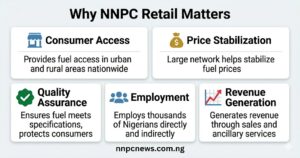
Why NNPC Retail Matters
Consumer Access
NNPC Retail provides consumers with access to petroleum products. Its nationwide network ensures that fuel is available in urban and rural areas.
Without NNPC Retail, many Nigerians would struggle to find fuel.
Price Stabilization
As a major retailer, NNPC Retail helps stabilize fuel prices. Its large network and government ownership allow it to absorb some market fluctuations.
The NNPC and fuel subsidy explained context helps understand NNPC Retail’s role in price management.
Quality Assurance
NNPC Retail ensures product quality at its stations. Consumers can trust that fuel from NNPC Retail meets specifications.
This is particularly important given concerns about adulterated products in the market.
Employment
NNPC Retail employs thousands of Nigerians. Station attendants, managers, maintenance staff, and support personnel all work for the subsidiary.
The subsidiary also creates indirect employment through contractors and suppliers.
Revenue Generation
NNPC Retail generates revenue through product sales and ancillary services. This revenue contributes to NNPC Limited’s overall financial performance.
The NNPC financial statements explained show how retail operations contribute to the bottom line.
Recent Developments
Network Expansion
NNPC Retail continues to expand its network. New stations are being opened in underserved areas.
The goal is to ensure that every Nigerian has access to quality fuel.
Modernization
Many NNPC Retail stations are being modernized. Upgrades include:
- New station designs
- Improved lighting and security
- Better convenience stores
- Digital payment systems
These upgrades improve customer experience.
Alternative Energy
NNPC Retail is also exploring alternative energy products. This includes:
- Compressed Natural Gas (CNG) for vehicles
- Liquefied Petroleum Gas (LPG) for cooking
- Electric vehicle charging stations (future)
The NNPC and domestic gas supply obligations relate to these alternative energy initiatives.
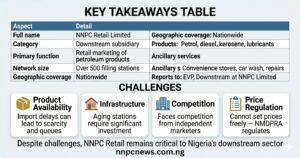
Challenges
Product Availability
When refineries are not producing, NNPC Retail depends on imports. Import delays can lead to scarcity and queues at stations.
The NNPC and fuel scarcity explained context helps understand these challenges.
Infrastructure
Some NNPC Retail stations are aging. Infrastructure maintenance requires significant investment.
Competition
NNPC Retail faces competition from independent marketers and other brands. Maintaining market share requires continuous improvement.
Price Regulation
Fuel prices are regulated by the government. NNPC Retail cannot set prices freely based on market conditions.
The who regulates NNPC question helps explain why NMDPRA sets prices, not NNPC Retail.
Key Takeaways
| Aspect | Detail |
|---|---|
| Full name | NNPC Retail Limited |
| Category | Downstream subsidiary |
| Primary function | Retail marketing of petroleum products |
| Network size | Over 500 filling stations |
| Geographic coverage | Nationwide |
| Products | Petrol, diesel, kerosene, lubricants |
| Ancillary services | Convenience stores, car wash, repairs |
| Reports to | EVP, Downstream at NNPC Limited |
Conclusion
NNPC Retail Limited is a downstream subsidiary of NNPC Limited. It manages the company’s network of filling stations and markets petroleum products to consumers.
NNPC Retail currently operates over 500 filling stations nationwide. It is one of the largest fuel retailers in Nigeria.
The subsidiary sells petrol, diesel, kerosene, and lubricants. It also manages convenience stores, car washes, and other ancillary services.
NNPC Retail reports to the EVP, Downstream at NNPC Limited. It works closely with PPMC for wholesale distribution and with the refineries for product supply.
For Nigerians, NNPC Retail is the most visible part of the NNPC group. It provides access to fuel, helps stabilize prices, ensures quality, creates employment, and generates revenue. Despite challenges like product availability and aging infrastructure, NNPC Retail remains a critical part of Nigeria’s downstream petroleum sector.
Official sources for verification:
Last updated: April 2026. Information based on Petroleum Industry Act 2021 provisions, NNPC announcements, and official government communications.