Before 2021, the answer was simple: NNPC regulated itself. Sort of.
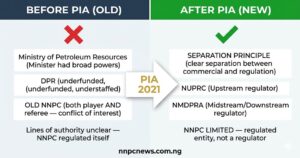
The old NNPC both participated in the industry and regulated it. It was the player and the referee. The Department of Petroleum Resources (DPR) sat under the Ministry of Petroleum Resources and handled some oversight, but the lines were blurry. Conflicts were built into the system.
The Petroleum Industry Act 2021 changed that. It separated commercial operations from regulation. It created two new independent regulatory agencies. And it left NNPC Limited to focus exclusively on making money.
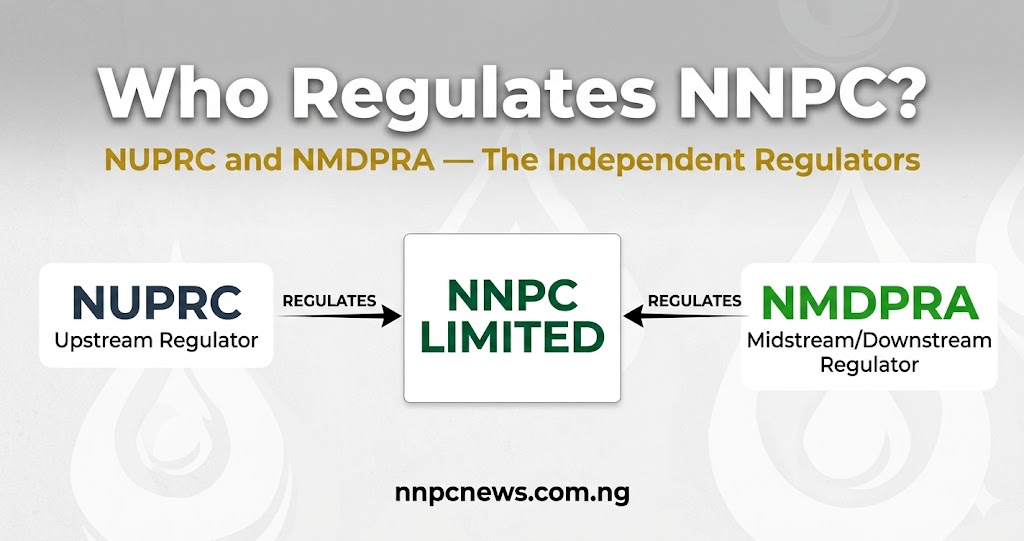
So who regulates NNPC now? The short answer: the Nigerian Upstream Petroleum Regulatory Commission (NUPRC) and the Nigerian Midstream and Downstream Petroleum Regulatory Authority (NMDPRA). But the full answer is more detailed.
Here’s who oversees what, how the system works, and why it matters.
The Short Answer
Two agencies regulate NNPC Limited today:
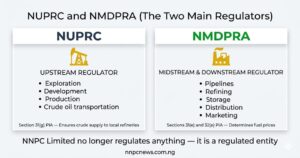
- Nigerian Upstream Petroleum Regulatory Commission (NUPRC) — regulates upstream activities: exploration, development, production, and crude oil transportation.
- Nigerian Midstream and Downstream Petroleum Regulatory Authority (NMDPRA) — regulates midstream and downstream activities: pipelines, refining, storage, transportation, distribution, and marketing.
Both agencies were established by the Petroleum Industry Act 2021. They are independent, focused, and separate from commercial operations.
NNPC Limited no longer regulates anything. It is a regulated entity, not a regulator.
If you’re curious about who regulates NNPC, these two agencies are the complete answer.
Before the PIA: The Old Regulatory Framework
The Department of Petroleum Resources (DPR)
Before the PIA, the Department of Petroleum Resources was the primary regulator. It operated under the Ministry of Petroleum Resources.
The DPR issued licenses, monitored compliance, and enforced regulations. It covered upstream, midstream, and downstream activities. But it was underfunded, understaffed, and often overwhelmed.
The DPR also had an awkward relationship with NNPC. NNPC was a government agency with its own regulatory powers. The lines of authority were unclear.
NNPC’s Dual Role
The old NNPC both participated in the industry and regulated it. It held equity in joint ventures, operated refineries, marketed products — and also issued permits, monitored compliance, and enforced regulations.
This created obvious conflicts. Could a regulator be impartial when it was also a commercial player? The answer was no.
The difference between NNPC and NNPC Limited includes this fundamental separation. One was both player and referee. The other is just a player.
The Ministry of Petroleum Resources
The Ministry oversaw both NNPC and the DPR. The Minister of Petroleum Resources had broad powers to grant licenses, set policies, and direct operations.
This centralized power in one political office. It created opportunities for political interference and made independent regulation difficult.
After the PIA: The New Regulatory Framework
The Separation Principle
The PIA established a clear separation between commercial operations and regulation. NNPC Limited focuses exclusively on making money. Two independent agencies handle regulation.
This separation is a cornerstone of the reform. It addresses the conflicts built into the old system.
The Two Agencies
The PIA created two regulatory agencies, one for upstream and one for midstream and downstream. This specialization allows each agency to develop deep expertise in its area.
The laws governing NNPC in Nigeria now clearly define these roles.
The Nigerian Upstream Petroleum Regulatory Commission (NUPRC)
Establishment and Mandate
The NUPRC was established by the PIA to regulate upstream petroleum operations. Upstream activities include exploration, development, production, and crude oil transportation.
The Commission is independent. It has its own board, its own funding, and its own enforcement powers. It does not report to NNPC Limited or take orders from commercial entities.
Key Functions
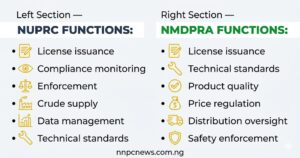
| Function | Description |
|---|---|
| License issuance | Grants exploration, production, and development licenses |
| Compliance monitoring | Ensures operators follow regulations and best practices |
| Enforcement | Imposes penalties for violations |
| Crude supply | Ensures crude supply to local refineries |
| Data management | Maintains petroleum data and records |
| Technical standards | Sets technical requirements for upstream operations |
Relationship with NNPC Limited
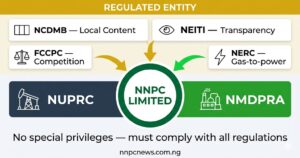
NUPRC regulates NNPC Limited like any other industry participant. NNPC Limited has no special privileges or exemptions.
The Commission also has a specific role in relation to NNPC Limited. Under Section 31(g) of the PIA, NUPRC ensures crude supply to local refineries. NNPC Limited’s role is restricted to dealings in royalty oil, profit oil, and tax oil only.
If you’re trying to understand what NNPC Limited is under the Petroleum Industry Act, part of the answer is that it is a regulated entity subject to NUPRC oversight.
Enforcement Powers
NUPRC can impose penalties for violations of regulations. This includes fines, license suspension, and license revocation.
The Commission can also require operators to take corrective action. If an operator fails to comply, NUPRC can step in and take the action itself, charging the cost to the operator.
The Nigerian Midstream and Downstream Petroleum Regulatory Authority (NMDPRA)
Establishment and Mandate
The NMDPRA was established by the PIA to regulate midstream and downstream petroleum operations. Midstream activities include pipelines, storage, and processing. Downstream activities include refining, transportation, distribution, and marketing.
The Authority is independent. It has its own board, its own funding, and its own enforcement powers.
Key Functions
| Function | Description |
|---|---|
| License issuance | Grants licenses for pipelines, refineries, storage, and marketing |
| Technical standards | Sets standards for midstream and downstream operations |
| Product quality | Ensures petroleum products meet specifications |
| Price regulation | Determines petroleum product prices (Sections 31(e), 32(e)) |
| Distribution oversight | Manages product distribution (Section 32(h)) |
| Safety enforcement | Ensures safe operations of facilities |
Price Determination
This is a critical function. Sections 31(e) and 32(e) of the PIA place responsibility for fixing petroleum product prices with the NMDPRA, not NNPC Limited.
The company cannot unilaterally decide what petrol costs at the pump. The Authority sets the framework.
Distribution Oversight
Section 32(h) gives the Authority responsibility for distribution of petroleum products. Independent marketers can purchase directly from refineries on their own terms. NNPC Limited cannot impose itself as the sole distributor.
Relationship with NNPC Limited
NMDPRA regulates NNPC Limited like any other industry participant. The company must comply with all regulations, obtain necessary licenses, and submit to inspections.
Knowing who regulates NNPC in the downstream sector means understanding NMDPRA’s role.
Other Regulatory Bodies
The Nigerian Content Development and Monitoring Board (NCDMB)
The NCDMB was established under the Nigerian Oil and Gas Industry Content Development Act 2010. It is not part of the PIA, but it plays a significant regulatory role.
The Board ensures that NNPC and its partners prioritize Nigerian companies in contracts. It sets minimum thresholds for local participation in petroleum operations.
NNPC Limited must comply with local content requirements. The Board monitors compliance and can impose penalties for violations.
The Nigeria Extractive Industries Transparency Initiative (NEITI)
NEITI is not a regulator in the enforcement sense. But it plays an important oversight role.
The NEITI Act requires disclosure of revenues from extractive industries including petroleum. NNPC must provide information to NEITI for audit and reporting purposes.
NEITI reports have revealed discrepancies in revenue remittances, questionable expenditures, and underperformance of refineries. Without NEITI, the pressure for reform would have been much weaker.
The NNPC and NEITI reports explained show how this transparency mechanism works.
The Federal Competition and Consumer Protection Commission (FCCPC)
The FCCPC regulates competition and consumer protection across all sectors, including petroleum.
NNPC Limited must comply with competition laws. It cannot engage in anti-competitive practices or abuse its market position.
The Nigerian Electricity Regulatory Commission (NERC)
For gas-to-power activities, NERC has jurisdiction. NNPC Limited supplies gas to power plants, and those transactions fall under NERC’s oversight.
What This Means for NNPC Limited
NNPC Limited is Regulated, Not a Regulator
The most important change is that NNPC Limited no longer regulates anything. It is a commercial company subject to regulation by independent agencies.
This separation addresses the conflicts built into the old system. NNPC Limited can focus on making money. Regulators can focus on oversight.
No Special Privileges
NNPC Limited has no special privileges or exemptions from regulation. It must obtain licenses like any other operator. It must comply with all regulations. It is subject to inspections and enforcement actions.
If it violates regulations, it faces the same penalties as any other company.
Transparency Requirements
The PIA requires NNPC Limited to publish audited financial statements annually. This transparency enables regulators and the public to assess the company’s performance.
The NNPC financial statements explained show how this works in practice.
What This Means for Nigerians
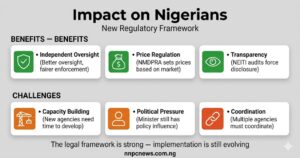
Independent Oversight
For the first time, Nigeria has independent regulatory agencies for the petroleum sector. NUPRC and NMDPRA are not controlled by NNPC Limited or the Ministry of Petroleum Resources in the same way the old DPR was.
This independence should lead to better oversight, fairer enforcement, and reduced political interference.
Price Regulation
The NMDPRA determines fuel prices. This is a politically sensitive function. The Authority is supposed to base prices on market conditions, not political pressure.
Whether this works in practice remains to be seen. But the legal framework is clear: NNPC Limited does not set prices.
Transparency and Accountability
NEITI provides an additional layer of oversight. Its audits force disclosure of information that would otherwise remain hidden.
For Nigerians, this means more information about how oil revenues are managed. More information means more accountability.
Challenges in the New System
Capacity Building
NUPRC and NMDPRA are new agencies. Building capacity — hiring staff, developing systems, establishing procedures — takes time.
In the interim, there may be gaps in oversight. The agencies need time to become fully effective.
Political Pressure
Despite their legal independence, NUPRC and NMDPRA operate in a political environment. The Minister of Petroleum Resources still has policy influence. The President appoints board members.
Resisting political pressure will be an ongoing challenge.
Coordination
Multiple agencies regulate different aspects of the petroleum sector. NUPRC, NMDPRA, NCDMB, NEITI, FCCPC, NERC — the list is long.
Coordinating among these agencies to avoid overlap or gaps is challenging. The PIA provides some coordination mechanisms, but implementation is still evolving.
Summary: Who Regulates What
| Regulator | Scope | Key Functions |
|---|---|---|
| NUPRC | Upstream | Licenses, compliance, enforcement, crude supply |
| NMDPRA | Midstream/Downstream | Licenses, standards, pricing, distribution |
| NCDMB | Local content | Nigerian participation requirements |
| NEITI | Transparency | Revenue disclosure, audits |
| FCCPC | Competition | Anti-trust, consumer protection |
| NERC | Gas-to-power | Electricity sector oversight |
The Conclusion
Before the PIA, regulation of Nigeria’s petroleum sector was fragmented and conflicted. The old NNPC was both player and referee. The DPR was underfunded. The Minister had broad, unchecked powers.
The PIA changed this. It created two independent regulatory agencies: NUPRC for upstream, NMDPRA for midstream and downstream. It separated commercial operations from regulation. NNPC Limited is now a regulated entity, not a regulator.
Other bodies — NCDMB, NEITI, FCCPC, NERC — provide additional oversight. The system is not perfect. Capacity is still being built. Political pressure remains a concern.
But the legal framework is fundamentally different. For the first time, Nigeria has independent regulators for its petroleum sector. And NNPC Limited, for the first time, answers to someone other than itself.
Official sources for verification:
- • Petroleum Industry Act 2021 on the FAO Legal Database
- • Nigerian Upstream Petroleum Regulatory Commission (NUPRC)
Last updated: April 2026. Information based on Petroleum Industry Act 2021 provisions, NUPRC and NMDPRA mandates, and official government communications.